
Press "Enter" to skip to content

How is Self-defense Different From Martial Arts?

Many people have the impression that to learn to protect themselves against everyday dangers they have to learn a martial art.

This simply isn’t true.

Instead, empowerment self-defense techniques are what you use for real-world dangers, especially for those targeted for gender-based violence: women, LGBTQIA+, and non-binary people who face harassment, abuse, and sexual assault.
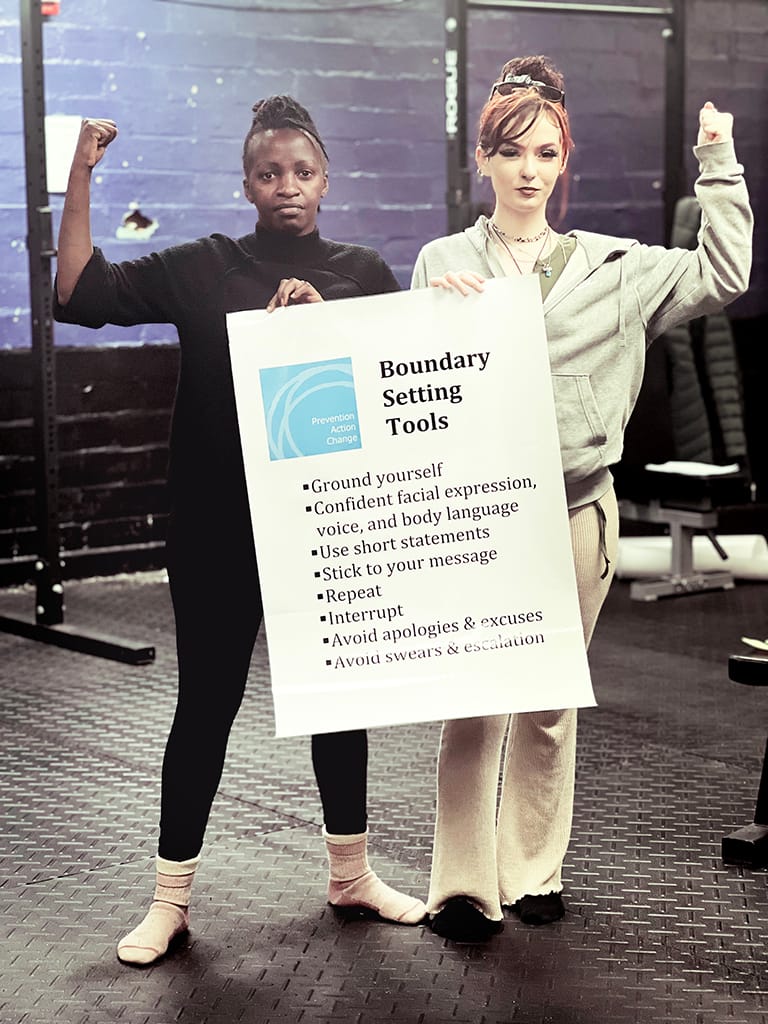
These techniques are best addressed through a quality empowerment self-defense class.

two women holding up a poster
Self-defense Martial Arts Both
Physical Effort and Ability
  • Anyone can learn basic physical self-defense regardless of body size, fitness level, age, or physical limitations.
  • Is a good workout.
  • Will get you in shape and bring you the health benefits of fitness.
  • Some schools are geared toward sports and competition and attract younger or more athletic people.
  • Other schools are non-competitive and view martial arts as a practice open to anyone.
  • Get you in touch with your physical power.
Confidence and Situational Awareness
  • Teaches skills to use against harassment, abuse, and assault, including everyday situations that don’t involve a physical attack.
  • Builds situational awareness and assessment skills in determining level of threat, barriers and aides to safety, and techniques for managing adrenaline in the moment.
  • May help you develop the confidence to handle daily situations teach awareness to help with prevention.
  • The physical fighting techniques of martial arts contain ancient and powerful self-protection information.
  • Effective martial arts training can help you better understand their practical, realistic application to current-day attacks.
  • Increase confidence and situational awareness.
Learning Curve
  • Effective skills can be learned quickly.
  • Must be studied for a long time to attain proficiency. Often a life-long pursuit.
  • Create a stronger mind-body connection.
Social and Historical Awareness
  • Develops a broader awareness of issues related to violence based on gender identity or expression, disability, race, ethnicity, class, or status.
Personal Development
  • Develops self-respect and awareness, and reduces self blame.
  • Encourages personal insights into experiences with violence.
  • Develops discipline, respect, and focus.
  • May spur internal change as well as learning specific skills.
Connections Beyond the Classroom
  • Depending on the program, may connect to feminism, anti-racism, and larger sociopolitical issues.
  • Depending on the focus of each school, may encourage spiritual development and/or martial arts as sport and competition.
  • May make connections beyond the particular focus of the program or school.

Learn More About ESD

Overview
Instructor Certification
Code of Ethics
ESD Resources
ESD Research
Find a Certified Instructor
Self-defense vs. Martial Arts
Annual Conference